• Welcome
  • About Us
  • CommonWork
  • Purchase Veggies & Seedlings
    • Veggies & Flowers – Paseo Farmer’s Market
    • Seedlings – Lia’s Garden at CommonWealth
  • Patreon
  • Compost
    • Purchase Compost
    • Using Compost as a Heat Source
  • Urban Farm Tours
  • Education
    • Garden School
    • Beginning Gardener Video Series
    • Pollinator Garden
    • Hoop House
  • Map
  • Contact
CommonWealth Urban Farms

Homepage for CommonWealth Urban Farms

tomatoes 3 on vineAh, tomatoes! July is tomato month. Pictured here is Early Girl, a tomato we appreciate for being both early and flavorful. Most tomato plants take a break when hot weather really sets in; Juliet and Verona are mini-roma tomatoes that will keep producing even in August in Oklahoma. As is often the case, our best producer this year is a tasty little cherry tomato that came up as a volunteer next to our zinnias.

It’s been an odd season. With all the rain we got in May, we entered the summer well-hydrated, and temps still haven’t topped 100 degrees. So it seems like we should be having a most productive summer vegetable-wise, but actually we’ve had a poor harvest on squash, cucumbers, and even eggplant. I’m a bit baffled by it.
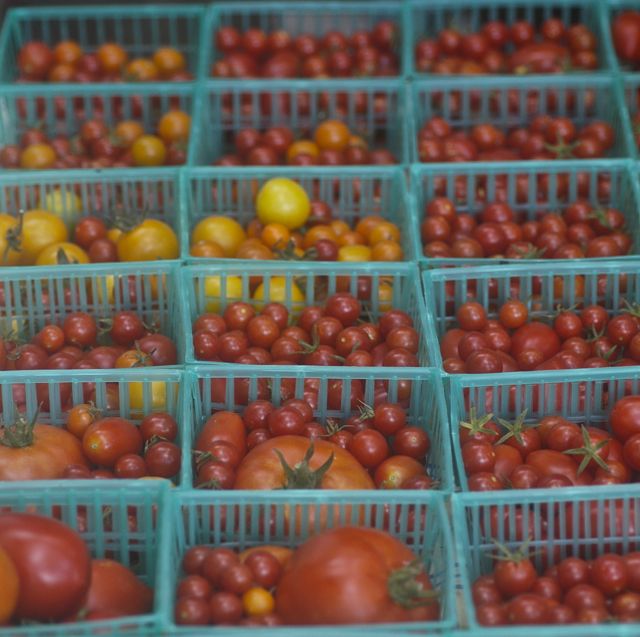
tomatoes in basketsAt least our tomatoes, basil, yard long beans, sweet peppers and shishito peppers are growing happily. Shishitos are a small, slender chile originating in Japan. Most are quite mild, but heads up! Every once in a while you’ll encounter a spicy one. If you’ve never tried shishitos, I recommend them grilled with a touch of lemon and sea salt. I can eat a whole bowlful without pausing – truly addictive.

Yard long beans shine during hot weather, and our prolific Red Noodle yard longs are excellent in a stir-fry. The trick with yard long beans is to cook them thoroughly; at my house, we like them cooked until they are slightly blackened. Heat your oil first and wait until it’s hot to add the beans, or they’ll get mushy.
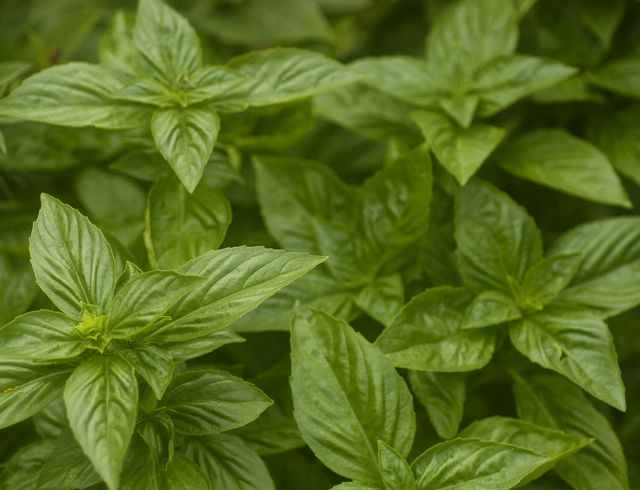
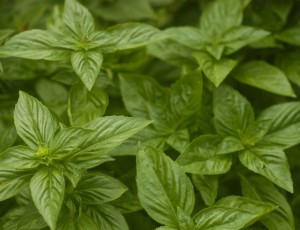
basil, genoveseAnd basil… we have basil! Genovese, the classic basil for pesto, as well as a miniature fine-leaf basil for garnishes, plus purple basil, thai basil, and lemon basil. We also have onions and potatoes from our June harvest. Email me if you’d like to order any of the above veggies, and we’ll hold them for you for pick up on Saturday morning.


Slow Flowers: Gomphrenagomphrena
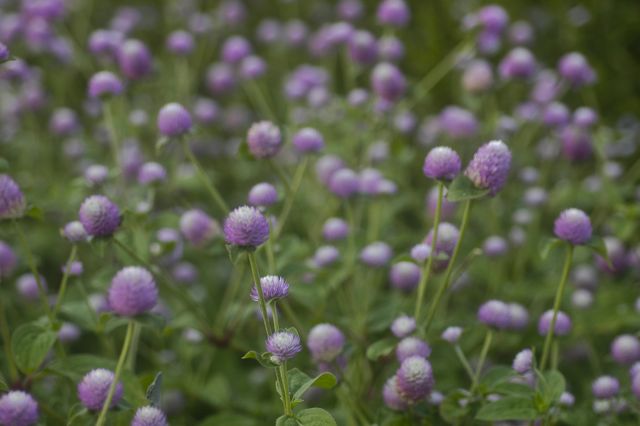
There are as many reasons to love gomphrena as there are tiny blooms on each plant. Gomphrena is delightful in the landscape, blooms continually all summer and through the fall, attracts butterflies, comes in a range of hues from white to pink, orange & red, has a long vase life, can be used as a dried flower, and takes our hot, dry summers without batting an eye.
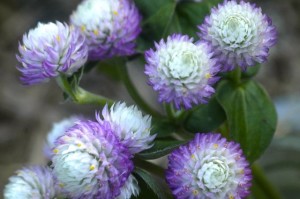
gomphrena pink bi-color detailPlant gomphrena seedlings in the spring in a sunny location. You can start them from seed yourself in pots indoors under lights in mid-February, for transplanting in mid-April. Gomphrena is drought resistant once established.

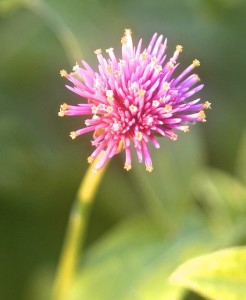
My all-time favorite gomphrena is Fireworks – each hot pink bract is topped with a yellow star-shaped stamen, looking for all the world like a tiny explosion of fireworks. Fireworks gomphrena fireworkshas extra long stems (great for bouquets) and grows into an open, bushy plant 2-4 feet tall. It complements other flowers in the landscape beautifully, and will be one of your “What IS that?” flowers when visitors stroll through your garden.
CommonWealth now grows over 25 varieties of flowers, with bouquets and bulk flowers available for purchase. More details on our Slow Flowers webpage!
Posted in General Info, Slow Flowers, Uncategorized
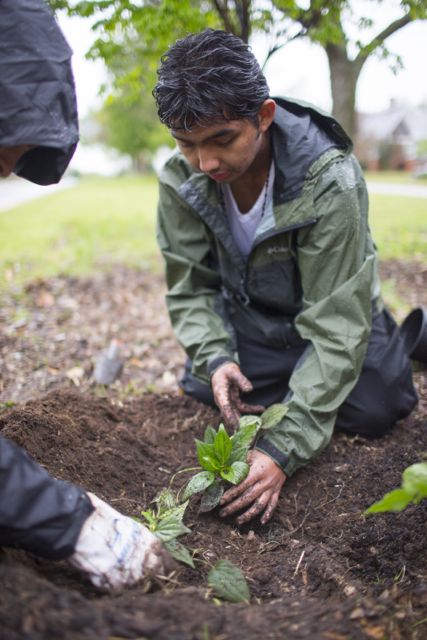
Benito planting@ lo-resWith the 4th of July upon us, I keep thinking about an article I read from the Schumacher Center for a New Economics.

“In the leaky bucket analogy for local economies, money flows into a region to circulate through local businesses like water into a bucket. Water that leaks out is money that escapes the local economy to pay for imports. The more watertight the bucket, the more wealth retained.”

It goes on to describe an initiative in the early 1980s in Oregon, where unemployment was rising due to the downturn in the timber industry. Job-training programs weren’t working, because no new jobs were open. A local organization began a matchmaking service, connecting local businesses with local manufacturers. Within the first year, they’d created “14 new local contracts for work formerly done elsewhere, replacing $500,000 of imported purchases, creating 90 new jobs and saving local purchasers about $125,000… The initiative encouraged Eugene’s citizens and its business owners to imagine what was possible, rather than what wasn‘t working.”

At CommonWealth, we’re vigorously exploring how we can grow food & flowers for our local community, generate desirable jobs, educate people to grow food themselves, transform our common waste (i.e. food waste and wood chips) into fertile compost, and strengthen the relationships that make us a healthy community. All of this creates a stronger bucket to allow local wealth to circulate & re-circulate within our community. We invite you to imagine with us what else is possible; how can we deepen the economic and spiritual vitality of our community?


CommonWealth Farm Stand

Saturdays from 9 am to noon
CommonWealth Urban Farms, 3310 N. Olie, OKC
This week: Fresh basil, carrots, new potatoes, leeks, onions, garlic, shallots, mild broccoli leaves, sweet baby turnips and some excellent baby kale. Our Slow Flower Bouquets are also available at our Farm Stand, or pre-order here.

Slow Flowers
On the subject of Leaky Buckets & Economic Independence… This week is American Flowers Week. Currently, 80% of flowers sold in the US are imported. We can change that! By buying your flowers locally, you can support local jobs and economies, lower your carbon footprint, help preserve farmland, support sustainable agricultural practices, and have fun getting to know your local flower farmers. And plug up another hole in that leaky bucket! In addition to vegetables, CommonWealth now grows over 25 varieties of flowers, with bouquets and bulk flowers available for purchase. Come by our Saturday farm stand and take a bouquet home with you!
Posted in CommonWork, Farm Stand, General Info, Slow Flowers, Uncategorized

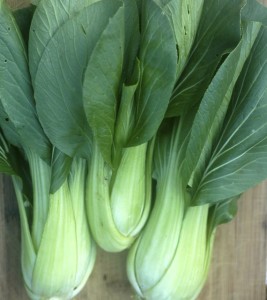
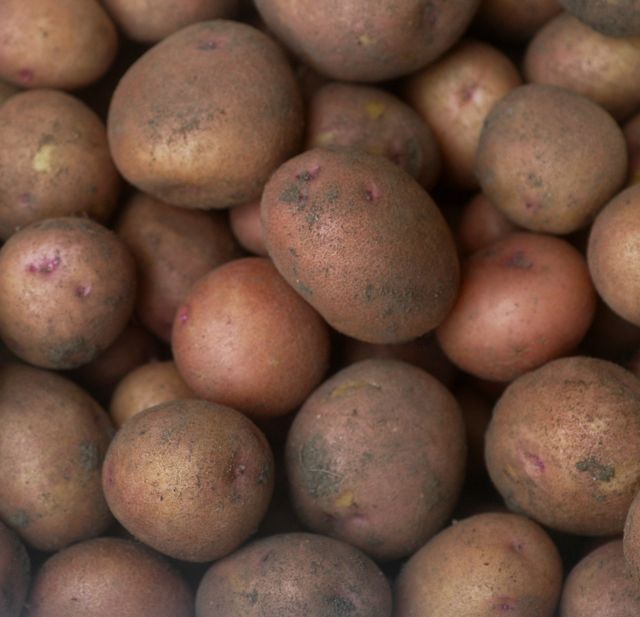
potatoes, red goldIf they’re really GOOD veggies, they will make you happy! Come on by our Farm Stand on Saturday morning. We’re getting rave reviews on our new potatoes, both the Yukon Gold and Red Pontiac. My personal favorite this week is our Black Summer bok choy – both because it’s short and plump and pretty dang cute, and because bok choy soaks up the flavors of ginger and garlic and toasted sesame oil in a stir-fry.

If I were the one deciding what gets plastered on billboards, it would be huge, gorgeous photos of vegetables; slices of homegrown tomatoes dripping with juice, bowls full of crisp, crunchy salad greens, and fat, bright green, sugar snap pea pods. Tantalizing me and reminding me of how good I feel when I eat lots and lots of vegetables. I have done extensive research on this subject. bok choy Blk SummerEaten plenty of cookies, croissants, chips, and well, I don’t actually feel very good afterwards. Whereas that kale-pineapple smoothie and Magic Disappearing Carrot Salad leave a calm, satisfied feeling inside my belly.
Need some help? Pick up a recipe card for Chipotle Potato Salad or Best Green Beans Ever when you come by.

CommonWealth Farm Stand
Saturdays from 9 am to noon
CommonWealth Urban Farms, 3310 N. Olie, OKC
This week: carrots, new potatoes, leeks, onions, garlic, bok choy, baby kale, chard, arugula and green beans.

Our Slow Flower Bouquets are also available at our Farm Stand, or pre-order here.

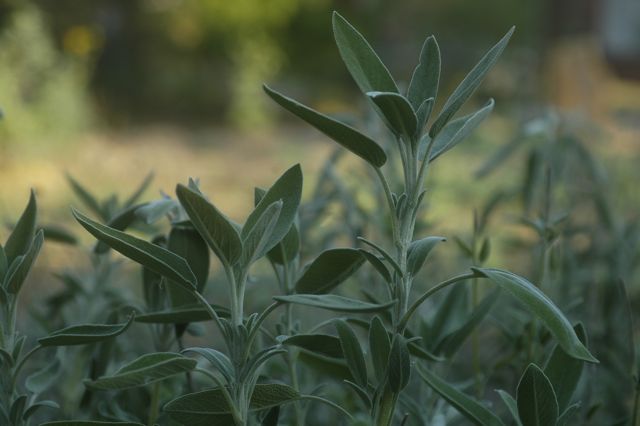
Garden School: Natural Farmingsage
Saturday, June 20th from 8:30 – 9 am
Mark Reeser will share his extensive knowledge of Korean Natural Farming, which uses beneficial, indigenous microbes including bacteria, fungi, nematodes and protozoa, resulting in fertile, healthy soil. There are many different methods and inputs used. Mark will focus specifically on making lactic acid bacteria and collecting/propagating beneficial indigenous microbes.

Posted in Farm Stand, Garden School, General Info, Slow Flowers, Uncategorized

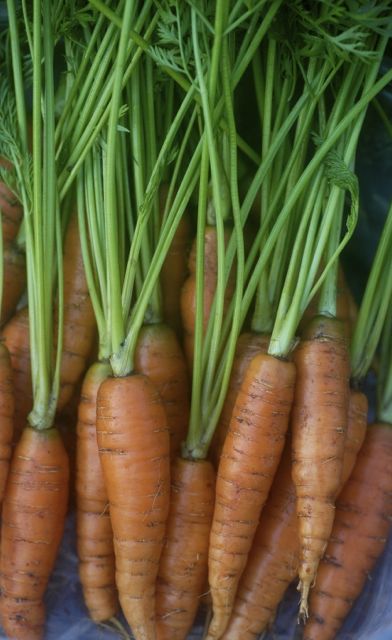
carrots, JuneRain again! Someone turned the spigot off and the heat on, a couple weeks ago. We are so grateful to have rain again. Nothing like the garden to give you a daily consciousness of the weather! Our most productive harvest years have always been when we had frequent rain. Plants may not require that much water, but ours produce much more when they get more water than they “need.”

CommonWealth Farm Stand
Saturdays from 9 am to noon
CommonWealth Urban Farms, 3310 N. Olie, OKC
A bountiful spread this week: spring carrots, new potatoes, garlic, leeks, onions, bok choy, chard, arugula, pea shoots and our lovely Slow Flower bouquets. Take a stroll through the early summer garden and see how your veggies are growing.

Slow Flowers: Asiatic Lilies
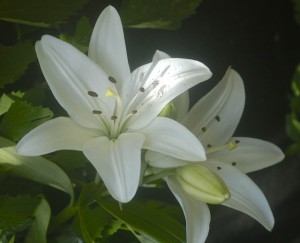
asiatic lily navonaFor pure heart-melting beauty, you can’t beat ’em! Asiatic lilies look delicate and exotic, but they are ridiculously easy to grow, even in Oklahoma red clay and heat. Plant the bulbs in the fall, then do absolutely nothing but watch as the leaves emerge in spring and the stalks begin to grow up and up, with the flower show in June. They offer a particular pleasure in that the large buds open one by one over time, giving a bit of performance art to each bouquet or garden plot.
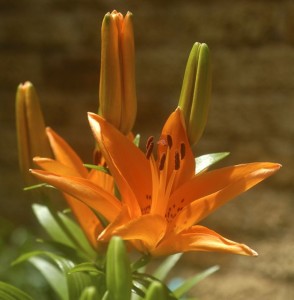
asiatic lily tresorNow the bad news. Lily pollen is famous for staining everything, so pinch off the anthers (the pollen-bearing oval tips inside the flower.) It’s easy to do so early on, before the flower has fully opened. Lilies – petals, leaves, pollen, even pollen water – are highly toxic to cats, so remove the pollen and dispose of carefully as it is easily airborne.
We have an abundance of lilies and snapdragons right now, which makes for outstanding bouquets. The lilies are blooming all at once this year; another week or so and they’ll be gone until next year. Our Slow Flower Bouquets are available at our Saturday am Farm Stand, or pre-order here.

Garden School: Herbs for the Gardenbasil, genovese
Saturday, June 13th from 8:30 – 9 am
Parsley, sage, rosemary and thyme… And basil, dill, cilantro, chives, mint, sorrel, lavender, lemon verbena and winter tarragon, too! Both common and less-familiar herbs will be shown and discussed as we taste our way through the herb garden.

Posted in CommonWork, Farm Stand, Garden School, General Info, Slow Flowers, Uncategorized

garlic muddyThursday was garlic harvest day. Miraculously, the bulbs didn’t rot away during the month of rain-of-biblical-proportions. Although they came out of the soil with plenty of mud attached, they’ll clean up nicely and be ready for garlic lovers at our weekly Farm Stand on Saturday. One clove of garlic planted in October turns itself into an entire head of garlic by June. That we should all be so productive! If you haven’t seen the “How To Peel a Head of Garlic in less Than 10 Seconds” video by Todd Coleman, it’s worth a watch (it works, but you have to shake the bejeezus out of it.)

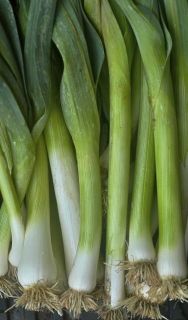
leeks, vertical

Onions, garlic, green onions, chives and shallots are all in the allium genus. Although they look similar, garlic and leeks have flat leaves, while onions and shallots have round, hollow leaves. Garlic is generally harvested all at once, but leeks have a long window during which they mature and can be enjoyed. I’m a newbie when it comes to cooking with leeks, but since we’re growing them, I’m playing around with them now in the kitchen. Leeks are much milder than onions or garlic; I ate one raw yesterday, just to see what it tasted like. Pretty good! A mellow, delicate flavor without the kick of onions. My current favorite recipe is simply to saute a couple leeks in some butter in a cast iron skillet, then braise them and EAT them right up, before guilt makes me put some aside for my beloved spouse (busted as soon as he reads this.)

New crop of baby arugula this week. Tender & mild; I was eating it by the handful while harvesting. I love arugula when it’s got tang but not bite.

CommonWealth Farm Stand Saturdays from 9 am to noonsnapdragon 1
CommonWealth Urban Farms, 3310 N. Olie, OKC
In addition to the alliums (garlic, leeks, onions & green onions) we’ll also have bok choy, chard, kale, lettuce mix, arugula, pea shoots and our lovely Slow Flower Bouquets.


Slow Flowers: Snapdragons
I planted THREE varieties of snapdragons (or snaps, as we affectionately call them) this year. Hey, I limited myself to just three!

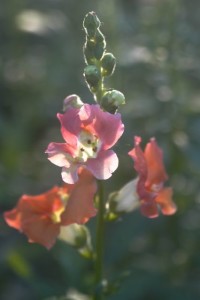
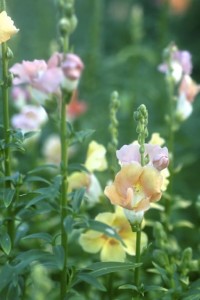
It’s pretty dang easy to fall in love with snaps. All those sweet little florets lined up vertically on stalks, in an array of gorgeous colors. Love the soft peach-rose combo in the photo here. Plus they have sturdy, straight stems, which makes them a snap (ha ha) to use in bouquets.snapdragons multi

Snaps don’t like hot weather; get them transplanted out early in the spring so you can enjoy them in May and June before the heat ramps up. They’re fairly cold hardy, so plant before the last freeze date.

And what about that name? According the Wikipedia, it comes from the flowers’ fancied resemblance to the face of a dragon that opens and closes its mouth when laterally squeezed.

Garden School: Saturday, June 6th from 8:30 – 9am
The Heat Lovers: Okra, Yardlong Beans & Sweet Potatoes
It’s not too late to plant these vegetables that thrive in our hot Oklahoma summers. Whether planting sweet potatoes “slips”, yardlong beans by seed, or okra by seed or transplants, we’ll give tips on how to successfully grow all three crops. Seeds of our favorite varieties will be available for donation.

-Lia Woods

Posted in Farm Stand, Garden School, Slow Flowers, Uncategorized

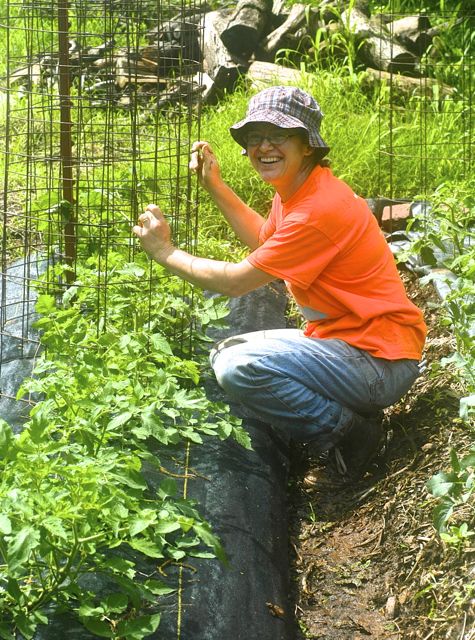
tomato cages & SaraSara and I, along with a few hundred mosquitoes, got our tomato plants caged today. Afterwards, as I was sloshing through the rice paddies – er, the urban farm, I took note of where the soil is waterlogged. In the low areas with the poorest soil, we’ve lost a few rows of crops, but the damage has been minor.

There’s a stark difference between new garden rows and areas that we’ve cultivated for several years, adding wheelbarrows of compost and growing cover crops to improve the soil. I was pulling green onions from one such row yesterday; the soil was dark brown, friable, moist but not saturated. Compare this to new rows that are heavy red clay now turned to red MUD. Astonishingly, it takes only a few years to transform the mud rows to fertile, loamy garden soil. I’ve watched this process repeatedly in our gardens, and it still amazes me. A few dollars of cover crop seed, a couple compost heaps, and you and your soil are in business.

Our hearts go out to those who have lost houses and livelihoods to the flooding. Farmer friends in Texas have written of the devastation there, and of the work ahead to restore homes and lands.

Garden School

Saturday, May 30th from 8:30  to 9:15 am, with Paul White of OKC Compost.

Don’t miss this one! Paul will lead us through the steps of brewing compost tea with a simple method you can set up at home. Compost tea can be used as a foliar spray or soil drench to suppress foliar diseases, increase nutrient uptake in plants and speed the breakdown of toxins. Bring lots of questions!

Slow Flowers

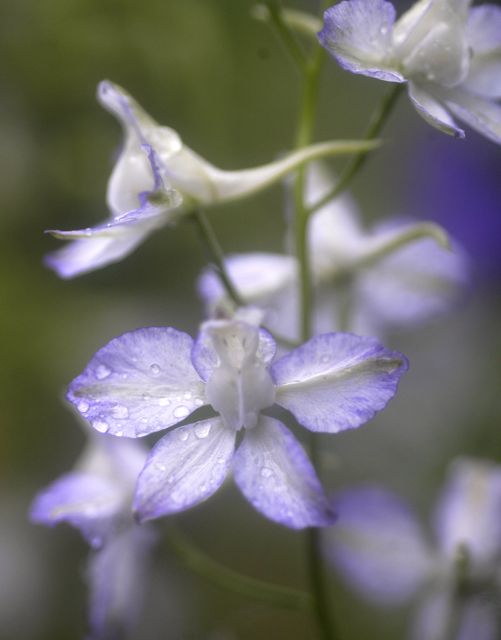
larkspur 2

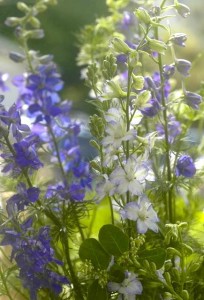
Larkspur is our featured flower this week. An annual often confused with its perennial cousin, delphinium, larkspur is a spring bloomer with an open, airy appearance. Spurred petals, like fairy wings, hover along tall spires in hues of lilac, white, rose and deep purple. Grown en masse, the effect is a fog of flowering softness.

As delicate as they appear, the long stems are sturdy in bouquets. Harvested before the upper blossoms have opened, we easily get a week or more of vase life. This is a reliable flower to grow at home. Simply broadcast the seed in early fall; after they germinate, the young plants will carry through the cold of winter, then grow rapidly in early spring. Larkspur usually flowers in late April and early May, although the chilly weather we’ve had this year has allowed us to enjoy larkspur all month. My front yard, now the larkspur capitol of the neighborhood, is happy testimony to larkspur’s propensity to self-seed. larkspur multi lighter

Our Slow Flower bouquets are available at our Saturday morning Farm Stand, or pre-order here. 

Farm Stand: Saturdays from 9 am to noon

CommonWealth Urban Farms, 3310 N. Olie, OKC

Rain makes for happy greens, and we have them! Chard, kale, broccoli greens, pea shoots and a new crop of bok choy. Plus the last of our green onions and some lovely new leeks. Broccoli and new potatoes round out our offerings this week.

Posted in Farm Stand, Garden School, General Info, Slow Flowers


Farm Stand: Saturdays from 9 am to noogreen onions bunchedn

CommonWealth Urban Farms, 3310 N. Olie, OKC

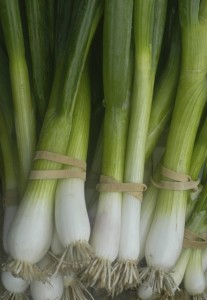
Lots of yummy veggies this week! Our green onions have been particularly delicious all through the spring. I think the bountiful rain has made them sweeter than usual. Big, fat green onions are my favorite as they are quick to prepare. Green onions can be eaten at any stage of growth. When they’re tiny, they’re often referred to as scallions. As they get large enough to just start to form round bulbs, they’re referred to as spring onions.

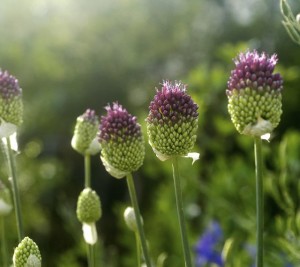
Onions, shallots, leeks and garlic are all members of the illustrious allium family This time of year, they start to send up long stalks called scapes with a bud on the end that will eventually open up to a lovely, spherical flower. There are many alliums, purple tipornamental varieties of allium grown just for the flower, like these drumstick or Allium sphaerocephalon. You can also harvest the young scapes and buds for a tasty treat.
Green onions are a natural with eggs, as in this recipe for Mushroom & Scallion Frittata. They’re also wonderful roasted or grilled.

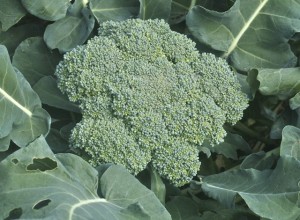
Broccoli Greens are my new favorite green; flavorful and very mild. None of that spicy kick like mustard or turnip greens. All these years I’ve grown and harvested broccoli, not realizing that the greens were just at tasty as the florets!broccoli

This week:

Broccoli Greens and Broccoli

Skyphos Red Buttercrunch Lettuce

Chard, Ruby Red and Fordhook

Red Russian KaleChard, ruby red shorter

Green Onions

Baby Leeks & Shallots

Pea Shoots

Flower Bouquets

Slow Flower Bouquet

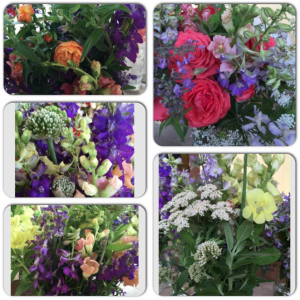
Flowers 5-20-15Snapdragons, larkspur and roses, oh my! We’re a week into flower-bouquet-season, and almost every day I see another type of flower starting to bloom. Snapdragons are the star this week, with delicate Ammi (False Queen Anne’s Lace) just a step behind. Come by our Farm Stand on Saturday between 9 am and noon to pick up a bouquet of our local, sustainably grown flowers. Or sign up here for our Slow Flower Coupons or season membership.
No Garden School this Saturday due to Memorial Day Weekend. We’ll be back on Saturday, May 30th for a special workshop from 8:30 to 9:15 am with OKC Compost presented by Paul White: Making Compost Tea.

Posted in Farm Stand, Garden School, Slow Flowers

lettuce, forellenschluss Our new Farm Stand is now open on Saturdays from 9 am to noon at the urban farm. Drop by for some uber-fresh veggies and take a stroll thru our beautiful, beloved farm. My personal favorites this week:

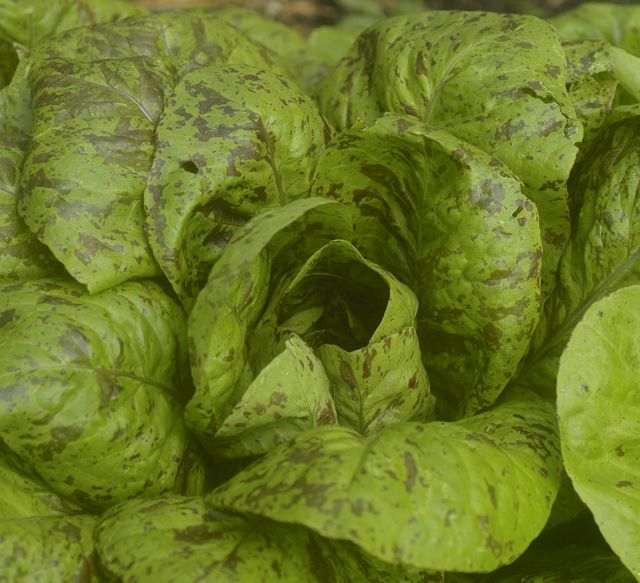
Lettuce: Forellenschluss romaine & Skyphos buttercrunch. Crazy good lettuce! Buttery, sweet, slightly addictive.

Green Onions: Sweet, juicy, with just a hint of onion-zip. I usually shy away from raw onions, but I’m eating these darlin’s straight out of hand.

Baby Leeks: sauté in a bit of butter until just browned. Absolute ambrosia.

Plus kale, chard, broccoli greens and fresh shallots. bouquetAnd…

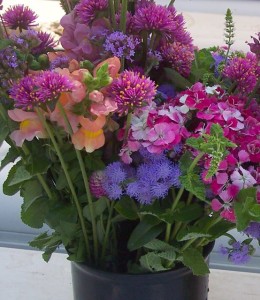
Slow Flower Bouquets! Woo hoo! It’s flower inauguration week at CommonWealth. We’re going whole hog growing cut flowers this year, in partnership with our dear friend, Kamala Gamble of Guilford Gardens. Come by the Farm Stand on Saturday to pick up a bouquet, or sign up here for our Slow Flower coupons or season membership.

Like Slow Food, the Slow Flowers movement comes from an appreciation of what is local, seasonal and sustainable, a desire to support small farmers and family farms, and an emphasis on quality of life rather than speed or quantity.

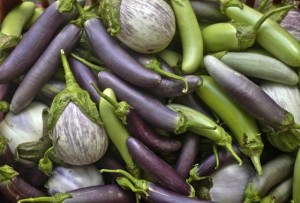
Garden School, May 16th: Peppers, Chiles & Eggplanteggplant medley
8:30 – 9 am at CommonWealth
Details & Sign-Up here

Sweet or hot, peppers are easy to grow and fun to eat. Eggplants come in a beautiful array of colors and shapes, and are terrifically versatile in the kitchen, yet often underappreciated. Learn about some of the many wonderful varieties suited to the home garden, how to plant them, disease and pest solutions, and harvest tips.

Posted in Farm Stand, Garden School, Slow Flowers, Uncategorized

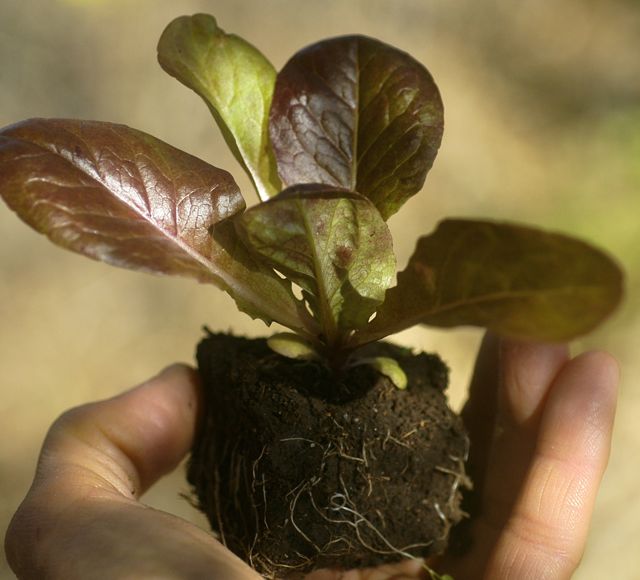
seedling in handCommonWealth Garden School

Saturdays from 8:30 to 9 am, March 7 thru October 31, 2015

CommonWealth Urban Farms at 3310 N. Olie, OKC

The first week will be a special 1 hour class, Designing and Starting Your Home Garden. Saturday, March 7 from 8:30 – 9:30 am. What kind of garden do you want? We’ll cover site selection, raised beds vs. growing in the ground, preparing a garden bed, seeds vs. seedlings, plus planting potatoes and onions.

Course Description

A practical, hands-on, weekly class specifically for home gardeners. If you’ve never gardened before, or if you want to deepen your gardening knowledge, this course is for you. Take what you learn straight home and put it to use in your own garden!

Each class will focus on a specific topic relevant to the season. For instance, in our class on broccoli, you will learn about different types of broccoli, when and how to plant broccoli, join in as we plant broccoli seedlings together, and go home confident in planting broccoli successfully in your home garden. Seedlings will often be available for purchase on-site.

Instructors

Elia Woods plus guest presenters. Elia is co-founder and farm manager of CommonWealth Urban Farms. She has 30 years of home-gardening experience, and previously worked as farm manager at Guilford Gardens before co-founding CommonWealth in the fall of 2010.

Cost

$10 per session; attend as many sessions as you wish

OR $200 for entire course ($100 savings!)

OR Volunteer for 2 hours on a Saturday and get a free session

Sign up here and pay by cash or check when you arrive, or stay after class and volunteer.

Email info@commonwealthurbanfarms.com for more information.

Commonwealthurbanfarms.com

Topics for 2015

Several of these topics will be addressed by special workshops.

Upcoming topics will be listed ahead on our FB page 

Vegetables

Potatoes & Onions, Green Onions & Leeks

Broccoli & Cauliflower

Salad Greens: Baby Lettuce & Head Lettuce, Spinach, Arugula & More

Greens, Greens & More Greens: Kale, Chard, Collards, Mustards, Tatsoi, Bok Choy, etc.

Roots from Seed: Carrots, Beets, Turnips, Radishes

Green Beans, Bush & Pole

Tomatoes

Peppers, Eggplant, Chiles

Vines: Summer Squash & Cucumbers, Winter Squashes

The Heat Lovers: Sweet Potatoes, Okra & Yardlong Beans

Asparagus

Garlic, Elephant Garlic & Shallots

Kohlrabi & Chinese Cabbage & Other Overlooked Wonders

What Else Can You Grow?

The Cut Flower Garden: Growing Flowers for Bouquets

Herbs for the Garden

Microgreens & Pea Shoots

Growing Mushrooms

The Bigger Picture

Cooking from the Garden

Composting

Vermicomposting (composting with worms)

Soil Health

Bugs: The Good, The Bad, The Ugly & The Cute + Planting an Insectary

Plant Diseases

Season Extension: Solar Cones, Row Cover, Cold Frames

Bio-remediation

Rainwater Harvesting

Irrigation & Watering Needs

Bio-Char

Growing Seedlings: soil blocks, in-ground, pots, potting soil mixes

Seed-saving

Cover Crops

The Year-Round Garden: Succession Planting, the Fall & Winter Garden

Putting the Garden to Bed for the Winter

Posted in Uncategorized Leave a comment

Veggie Pride

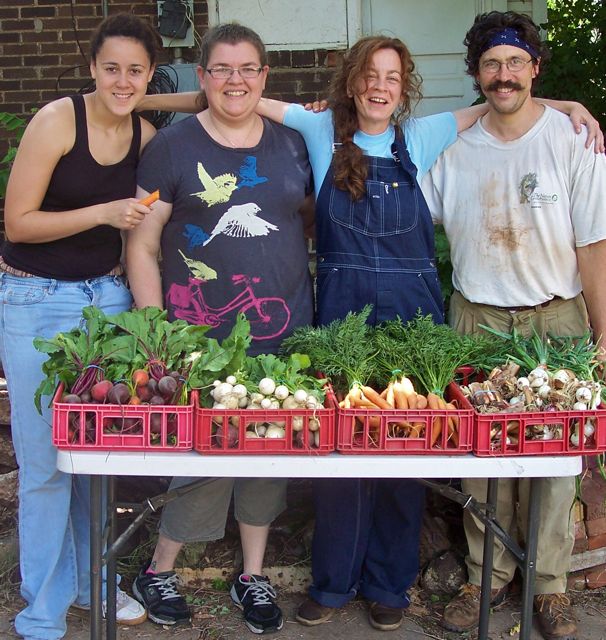
CommonWealth Urban Farms is a small urban farm located in near NW Oklahoma City. We provide fresh, nutritious vegetables to 30 families weekly from April through November. We fully support the proposed urban agriculture and urban hens ordinances that will clarify city code in relation to gardening and urban farming in OKC.

Being part of the cycle of growing food is a new and profound experience for many people who have grown up as city dwellers. I’ve watched it in the wide eyes of a child pulling a carrot out of the ground for the very first time, in the smile of one of our members as they walk through our farm and say, “Oh, this is where my vegetables come from!” and in myself, each time I watch a seed grow and push its tiny leaves through the soil’s crust.

Over the two years since we began, I’ve seen how eager our members have been to eat fresh, healthy food, and to learn where their food comes from. Members bring their children and friends over to show them our urban farm, they ask us questions on how to grow different vegetables, they volunteer for the chance to get outside and get their hands in the dirt.

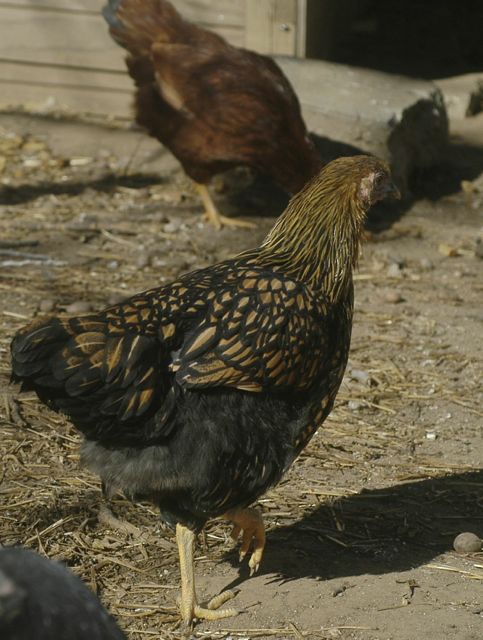
Chicken walking 2 lo-res

Whether it’s planting a tomato patch in the backyard, or a pepper plant in the flower border, or reaching into the chicken coop for a still-warm egg, nothing can replace the experience of connecting with our sources of sustenance.

A new neighbor told me that his realtor listed our urban farm as one of the selling points before he bought his house. I receive emails almost weekly from people throughout OKC asking me to add their names to the waiting list for our “Veggie Club.” We field questions from people all over the city, in fact, from across the country, regarding urban farming, composting and bio-remediation.

We believe both ordinances will help make Oklahoma City a healthier, more vital community. Thank you for giving the urban ag and urban hens ordinances your serious consideration.


Posted in Uncategorized Leave a comment
  • « Older Entries
  • 1
  • …
  • 6
  • 7
  • 8
  • 9
  • Newer Entries »

Like Us!

Friends of CommonWealth

  • Closer To Earth
  • Fertile Ground
  • Local Harvest
  • Native Farming Solutions
  • OKC Harvest
  • OKC Urban Ag Coalition
  • Paseo Farmers Market
  • SixTwelve

Become a Patron


Become a Member

Support CommonWealth

CommonWealth Urban Farms

info@commonwealthurbanfarms.com| 3310 N. Olie | Oklahoma City, OK 73118

Proudly powered by WordPress | WordPress Theme Custom Community 2 developed by ThemeKraft

Back to Top